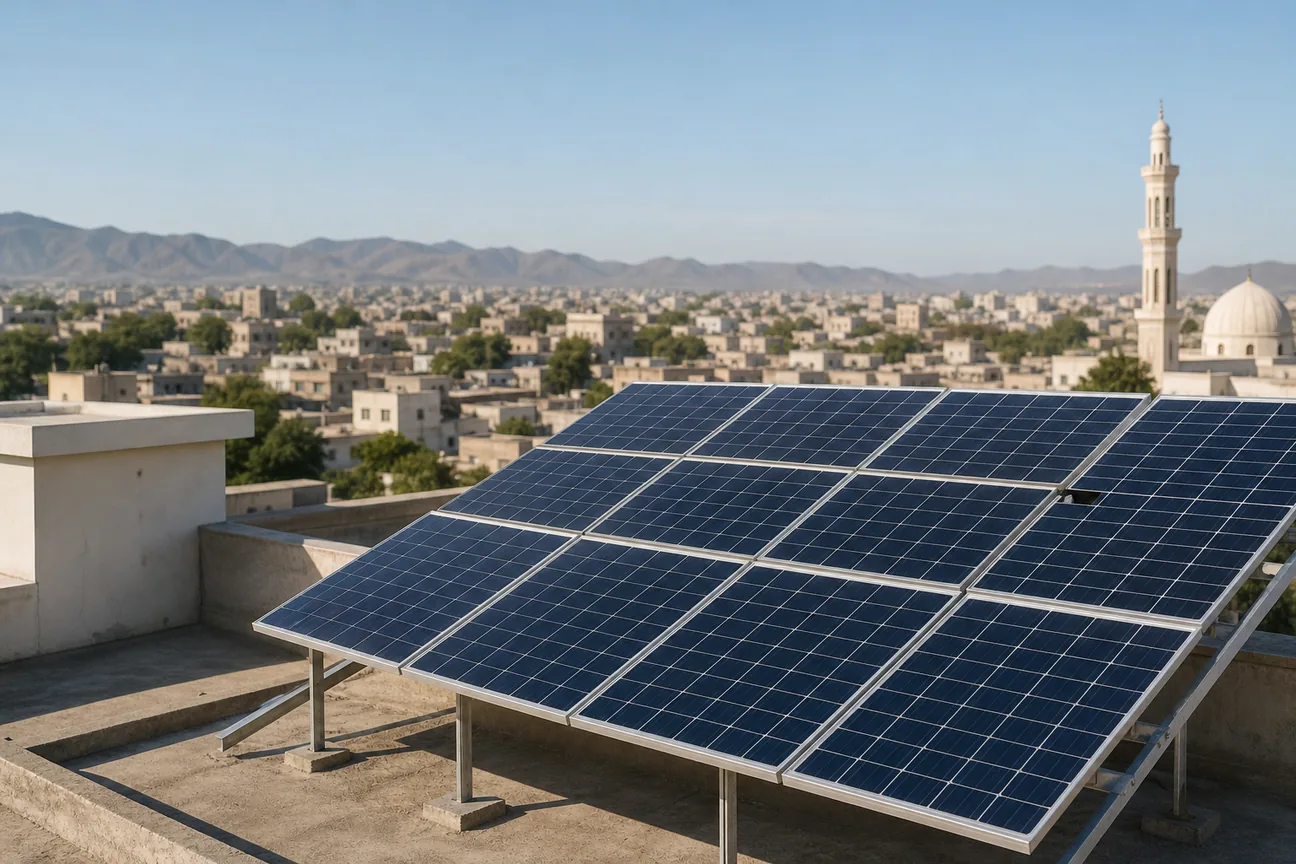
The biggest panel isn’t always the cheapest: a 580W Huasun HJT costs more per watt than the lower-wattage Inverex 540W in the available price estimates. Rates checked on 23 October 2026 are estimates, not guarantees; confirm current prices before paying. Azlaan Tools is free with no signup or fees; its access is separate from solar equipment costs.
We analyzed 33 comments and questions from YouTube and Quora about solar panel prices in Pakistan and found that 48% mentioned high and fluctuating prices.
1. JA Solar DeepBlue 4.0 - a value-focused option
JA Solar DeepBlue 4.0 is a cost-conscious panel choice for households comparing upfront spend with rated output. The available estimate is Rs25 to Rs27 per watt, based on a Pakistan price comparison read on 23 October 2026. That puts it close to the lowest per-watt figure in this shortlist.
Use the per-watt figure to compare quotes, not the price of one panel alone. Multiply the quoted rate by the panel’s stated wattage to check the panel cost, then ask whether the quote includes delivery and any opening or handling charge. Get the exact model and wattage in writing.
| Option | Available rate or rating | Useful decision point |
|---|---|---|
| JA Solar DeepBlue 4.0 | Rs25 to Rs27 per watt | Compare upfront panel cost |
| Inverex 540W | Rs24 to Rs26 per watt | Budget-focused home systems |
| Longi Hi-MO 6 | Rs28 to Rs30 per watt | Balance price and warranty |
| Jinko Tiger Neo | Starting at Rs29 per watt | Compare N-type options |
| Canadian Solar HiKu7 | 560W rating | Consider panel count on larger projects |
| Huasun HJT | Rs33 to Rs38 per watt | Check whether roof space is tight |
These are indicative panel rates, not an installed-system quote. Azlaan Tools is free with no signup or fees, and its daily solar rates page can help you check current panel, inverter and battery inputs before setting your budget. Equipment costs and any amounts calculated with the tools are separate from tool access.
JA Solar makes sense when the quote is for the exact model you want and the difference matters to your budget. Compare the full system next, since a panel saving may leave room for another part of the setup.
2. Inverex 540W - a budget-conscious residential pick
Inverex 540W is a budget-focused option for a household that wants to keep initial panel spending down. The available estimate, referenced on 23 October 2026, is Rs24 to Rs26 per watt, with a 540W rating.
Use the seller’s current quote and the panel’s exact model when comparing rates; delivery or other charges may also apply.
Ask for the panel serial numbers and warranty paperwork as part of the handover. Keep those records with your invoice. A low initial rate does not answer questions about the system’s final cost or expected savings, so compare like-for-like quotes for the same system size.
To size a home system against your actual load, use Azlaan Tools’ solar load calculator. Azlaan Tools is free with no signup or fees; that covers tool access, not solar equipment costs. A suitable system size depends on what you need to run, not simply on which panel has the lowest listed rate.
Inverex is worth comparing when the budget is tight. Before choosing it, put the warranty period and the full installed quote beside the panel price.
3. Longi Hi-MO 6 (550W) - balanced efficiency and price
Longi Hi-MO 6 at 550W is a balanced option for buyers who want to weigh price against the stated warranty. The available estimate, checked on 23 October 2026, is Rs28 to Rs30 per watt.
The panel price is an estimate, not the full system cost; rates are available from sellers on request. Ask the seller to identify the exact model and confirm the warranty document matches the serial number on the panel.
A panel’s watt rating describes its rated power under set test conditions; it doesn’t tell you the final cost of an installed system. For your own quote, compare the same system size and included work across sellers.
Longi fits a buyer who values a longer stated warranty and can pay more than the lowest quoted rates. Read the warranty terms before treating its duration as a promise of a particular output or payback. Azlaan Tools is free with no signup or fees; this applies to tool access, not solar equipment costs.
4. Jinko Tiger Neo - an entry into N-type panels
Jinko Tiger Neo is an N-type panel option for buyers comparing newer cell technology with upfront price. The available Pakistan estimate starts at Rs29 per watt. That is a starting point, not a guaranteed rate for every model or seller.
Ask for the exact model number and its datasheet, then compare the quoted panel wattage with that document. N-type is a technology label, not a substitute for checking the panel’s rated output, warranty and serial details. These details help you compare two quotes without relying on a seller’s general claim about a brand.
It can also help to compare the panel cost per watt with the expected size of your array. A small difference in the rate can matter across many panels, but only if the models and quote terms match. Don’t assume that a newer technology label means the option is automatically best for your roof.
For a wider shortlist of panel models, Azlaan Tools’ best solar panels in Pakistan page sits within its solar planning resources. Use it alongside current written quotes rather than as a substitute for stock confirmation.
Choose by model and paperwork first. Then compare the total panel price against the other options you’re considering.
5. Canadian Solar HiKu7 (560W) - higher wattage per panel
Canadian Solar HiKu7 at 560W is a higher-wattage option to consider for a commercial project. A higher rating may mean fewer panels are needed to reach a given panel capacity, but the final layout depends on the system design and available roof or ground space.
The available Pakistan research identifies the 560W rating and its commercial use case, but gives no price estimate to use here. Ask for a current written rate per watt. Compare it with other quotes only after checking that the model, wattage and quote basis are the same.
For a larger project, ask the installer to show the panel count and explain how the chosen panel size fits the proposed layout. Also check whether the quote includes delivery, mounting work and electrical installation. A panel’s wattage alone doesn’t tell you whether the full project quote is competitive.
Keep the commercial comparison focused on total project cost and panel count. A higher wattage rating is useful only when the model and layout suit the site.
6. Huasun HJT (580W) - a premium high-output option
Huasun HJT at 580W is a high-output option for buyers who need to make more use of limited roof area. The available estimate is Rs33 to Rs38 per watt, the highest price range per watt among the six options with research-backed rates. The price input is an estimate (source read 23 October 2026). Bigger wattage does not mean a lower unit price in this case.
Compare the panel rate with the system design, not just with another panel’s per-unit sticker price. If your roof has enough space for lower-priced panels, the HJT premium may not suit a budget-first plan. Azlaan Tools is free, with no signup or fees; tool access is separate from solar equipment costs.
HJT refers to a type of solar cell design. A photovoltaic system overview can help put the panel in context: panels are one part of a system that also needs suitable electrical equipment and installation. Your installer should show those costs separately in the quote.
Huasun is best considered when roof space is the constraint and the higher panel rate fits your budget. Ask for a model-specific quote and warranty paperwork before deciding.
7. Comparing panel options for suitable open or improved installations
When comparing panel options for an open or improved installation, ask the installer to explain the proposed mounting height and the surface below the array. The result depends on the site design, so don’t treat a general claim about extra output as a guaranteed gain for your home or business. Ask for the assumptions behind any estimate.
Check whether the quote compares panels at similar rated wattage. Then compare the full installed cost, including the structure needed for the proposed layout. If a higher mounting structure changes the project price, include that cost in the comparison rather than looking only at the panel rate.
For an improved or ground-mounted project, have the installer explain how the proposed layout affects the estimate. For a roof installation, ask whether the actual mounting plan suits your site and what assumptions are being used.
Azlaan Tools is free, with no signup or fees. Tool access is separate from solar equipment costs or any financial amounts you calculate.
8. Comparing panel options for space-limited roofs
If your roof has little spare area, compare panel options against the usable area rather than relying on a technology label. The available Pakistan price reference, read on 23 October 2026, identifies Jinko Tiger Neo as an entry into N-type technology, starting at Rs29 per watt. Other N-type prices vary by model, so get a specific quote rather than applying one brand’s rate to the whole category.
Ask the installer to map the usable roof area and show how many panels fit. Check that the quoted model’s datasheet matches the proposed panel count. This makes it easier to see whether a higher rate buys a useful fit for your roof or simply raises the initial bill.
One October market update described prices as having stabilised after a period of declines. It also noted that quieter-season deals may appear, while demand could push rates up when more buyers order ahead of summer. These are market expectations, not a price forecast you can rely on.
Rates can move with currency changes, supply and local demand. Azlaan Tools’ Solar Rates Today page shows daily updated panel, inverter and battery prices. Azlaan Tools is free with no signup or fees; tool access is separate from solar equipment costs. Use those figures as planning inputs, then confirm your selected model and delivery price with the seller.
Choose N-type on the basis of the datasheet and your roof’s limits. A technology label by itself doesn’t settle the value question.
9. Panels sold as local stock - check the batch before travelling
Panels sold as local stock are a buying route for people who want to confirm local stock before arranging collection or delivery. A ready-stock claim can change quickly. Ask the seller to confirm the exact model, wattage and batch on the day you plan to buy.
Get the quote in writing and confirm whether it is for a sealed pallet or individual open-pet panels. One October market update described a small per-watt charge for open-pet deals. Another wholesale-market reference described a much wider retail and wholesale spread, so ask what the quoted rate includes instead of assuming all sellers use the same terms.
Check the panel nameplate against the model datasheet, then ask for serial-number records and warranty documents. If you’re travelling, confirm the quantity is still held for you and ask about transport charges before setting out. This avoids making the trip based on a rate that applies only to a different batch or order size.
For a home buyer, the useful check is simple: match the written quote to the panels you’ll receive. Don’t rely on a general stock message alone. Azlaan Tools is free, with no signup or fees; this is separate from any solar equipment costs.
10. Wholesale pallet lots - lower unit pricing for larger projects
Wholesale pallet lots are a buying option for installers, businesses and larger projects that can use a larger quantity. Wholesale rates may be lower than individual retail rates, but the saving depends on the brand, order size, payment terms and current stock. It isn’t automatically the better deal for a household that needs only a few panels.

Ask for a quote that states the pallet quantity, model, per-watt rate and delivery terms. Get the seller to confirm whether the panels are sealed and whether the quoted amount includes transport. If you’re comparing a pallet quote with a retail quote, make sure both cover the same product and delivery point.
Transport can change the total, especially for a remote delivery. Ask about freight, unloading and any extra charge for opening a pallet. The amount should be clear before you pay. Keep the invoice and serial-number list so you can match the delivered panels with the purchase record.
Don’t buy more panels just to reach a lower rate if you can’t use the surplus. A pallet purchase is sensible when the project needs the quantity and you can verify the batch and paperwork.
Frequently asked questions
What is the current solar panel price per watt in Pakistan?
Available estimates read on 23 October put JA Solar DeepBlue 4.0 at Rs25 to Rs27 per watt, Inverex 540W at Rs24 to Rs26, Longi Hi-MO 6 at Rs28 to Rs30, Jinko Tiger Neo from Rs29, and Huasun HJT at Rs33 to Rs38. Treat these as dated reference figures, then confirm today’s rate for the exact model and batch.
Is a higher-wattage solar panel always better value?
No. Compare the rate per watt as well as the panel’s rated wattage. The available estimates put the 580W Huasun HJT at Rs33 to Rs38 per watt, while the 540W Inverex is Rs24 to Rs26. Roof space, model details and the full system quote also affect which option fits your project.
What should I check before buying solar panels?
Confirm the model number and wattage against the datasheet. Ask for a written quote that states the per-watt rate and delivery terms. Check the serial numbers and warranty paperwork when the panels arrive. If the deal is for a pallet, confirm the quantity and whether opening or transport adds a charge.
Are wholesale solar panels cheaper than retail panels?
Wholesale rates can be lower, especially for larger orders, but the final difference depends on the order size, brand and delivery terms. A pallet may also involve freight or handling costs. Compare the delivered total for the same panel model and quantity, rather than judging a wholesale quote against a retail sticker price.
Can Azlaan Tools tell me the final cost of a solar system?
Azlaan Tools has a Solar Price Estimator for estimated system costs from 1kW to 25kW in PKR, plus daily updated solar rates. Its tools are free with no signup or fees. Treat estimates as planning figures, not guaranteed quotes; panel stock, equipment choices, installation work and delivery affect your actual spend.
Conclusion
For a budget-focused purchase, compare Inverex and JA Solar first. Check the daily rates on Azlaan Tools, use the free solar load calculator to size your system, then get a written quote for the exact model and delivered cost.